Water Heater Failure & Flooding in Cary, NC
When a tank lets go it floods the room it sits in, and many Cary tanks sit upstairs or in the attic. The crew extracts, dries the structure, and checks where the water wicked.
(984) 378-1178Tap to call the 24/7 Cary dispatch line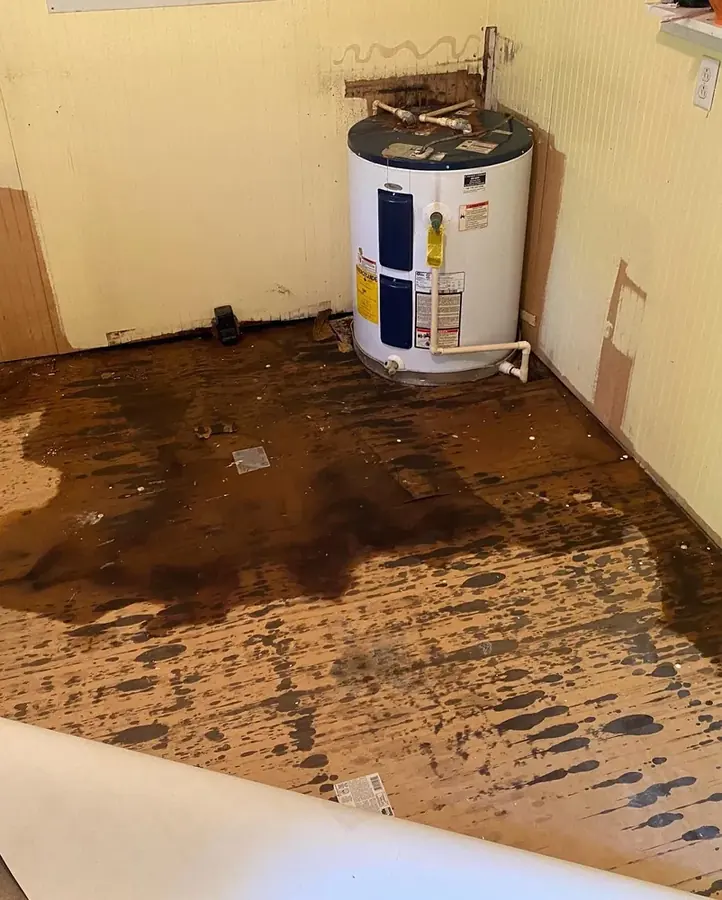
A water heater holds forty to eighty gallons, and when the tank finally rusts through or a fitting fails, all of it ends up on the floor, plus whatever keeps flowing until the supply is shut. In many newer Cary homes the tank sits upstairs or in the attic to save space, which means a failure floods the ceilings and rooms below, not just a utility closet. Old North State Restoration extracts it and dries the structure. A slow drip from a supply hose is closer to the appliance leak page; this page is the tank that failed and flooded.
What a failed tank floods
Where the tank sits decides how far the water travels:
- A garage or ground-floor closet tank floods the slab and nearby walls
- An upstairs or attic tank sends water through the ceiling into the rooms below
- Water wicks under baseboards and into wall cavities well beyond the wet spot
- Stored items, drywall, and flooring soak fast in an enclosed space
How a water heater flood is handled
The crew finds every path the water took and dries it, not just the puddle:
- Confirm the water and power to the unit are off
- Extract standing water and move or protect stored items
- Map moisture in the slab, framing, ceilings, and walls with meters
- Dry to a verified standard through the structural drying program, documented for the claim
the IICRC sets the drying standard the crews follow, so the structure is dried to a measured target, not just until it looks dry.
Signs a tank is about to fail
Most tanks warn you before they let go, if you know what to watch:
- Rusty or discolored hot water, or rust around the base and fittings
- Moisture, drips, or a small puddle under the unit
- Popping or rumbling sounds from sediment, and a tank past ten to twelve years old
- A drain pan that is dry because the tank has never leaked, or wet because it has
Water heater flooding right now?
Shut the water and power to the unit if you can, then call. A local crew rolls the moment you call across western Wake County.
How a water heater failure and flooding loss is handled in Cary
Call and dispatch
Whoever answers the Cary line sends the nearest crew, day or night, with pumps, air movers, and moisture meters.
On-site assessment
The tech who does the walkthrough finds the source and the full reach of the water, including what soaked into subfloor, lower levels, and wall cavities.
Extract and dry
The extraction crew pulls the standing water first, then air movers and dehumidifiers run to a verified dry standard, not just the surface.
Verify and document
Most crews record moisture readings daily until the structure holds a dry target, then document the loss the way an adjuster needs it.
How a water loss is handled in Cary
Rapid local response
The response team answers day or night, and the nearest crew heads out the moment you call, across Cary and western Wake County.
IICRC S500 drying standard
Trained crews with truck-mounted extraction, air movers, and moisture meters dry to a verified standard, not a shop vac and a box fan.
Claim-ready documentation
The loss is documented with timestamped photos and daily moisture readings, the paperwork an adjuster needs to move a claim.
Local water experts
Finished basements, sump pits, crawl spaces, and AC condensate lines: the local pros know how water moves through Cary homes.
From Cary across western Wake County
Local water damage pros cover Cary and western Wake County, day or night.
Local crews cover Cary and all of western Wake County, day or night. Whoever answers the Cary line asks for the cross street and which level of the house is wet, because that decides how much equipment goes on the truck.
Coverage runs across Cary, Apex, Morrisville, Holly Springs, Fuquay-Varina, Raleigh, Garner, Knightdale, Durham, and Chapel Hill.
See every town and ZIP covered ›Related restoration services
Cary water damage questions, answered
My water heater is flooding, what do I do first?
Shut off the water supply to the tank, usually a valve on the cold line at the top, and cut power or gas to the unit if you can do it safely. Then call us. Stay clear of standing water near outlets or the electrical panel.
Why do upstairs water heaters cause so much damage?
Many newer Cary homes put the tank upstairs or in the attic, so a failure drains straight down through ceilings into the rooms below, spreading across several floors instead of staying in one closet.
How much water comes out of a failed tank?
The tank itself holds forty to eighty gallons, and more keeps flowing from the supply line until it is shut off. That is why the flood spreads fast and why shutting the supply valve quickly makes a real difference.
Can you dry it without tearing out my walls?
Often yes. The crew maps the moisture and dries wall cavities and framing in place where it can, removing only materials that are contaminated or too saturated to recover. The goal is the least demolition needed to dry it properly.
Will insurance cover water heater failure?
A sudden tank failure is usually a covered loss. The crew documents the failure and the water damage with photos and moisture readings, the paperwork an adjuster needs. Coverage depends on your policy, so it is worth checking with your own insurer.
How can I prevent a water heater flood?
Replace a tank older than ten to twelve years, watch for rust and drips, make sure it sits in a working drain pan, and consider a leak sensor or an automatic shutoff valve, especially for an upstairs or attic tank.
A local Cary crew is standing by
Water sitting means damage spreading. Call Old North State Restoration and a local crew heads out across western Wake County, day or night.
(984) 378-1178Call now, a local crew picks up day or night