Appliance Leak Water Damage in Cary, NC
A washer hose, dishwasher, or fridge line can run for hours unnoticed. The crew finds the hidden water under cabinets and floors and dries it before it molds.
(984) 378-1178Tap to call the 24/7 Cary dispatch line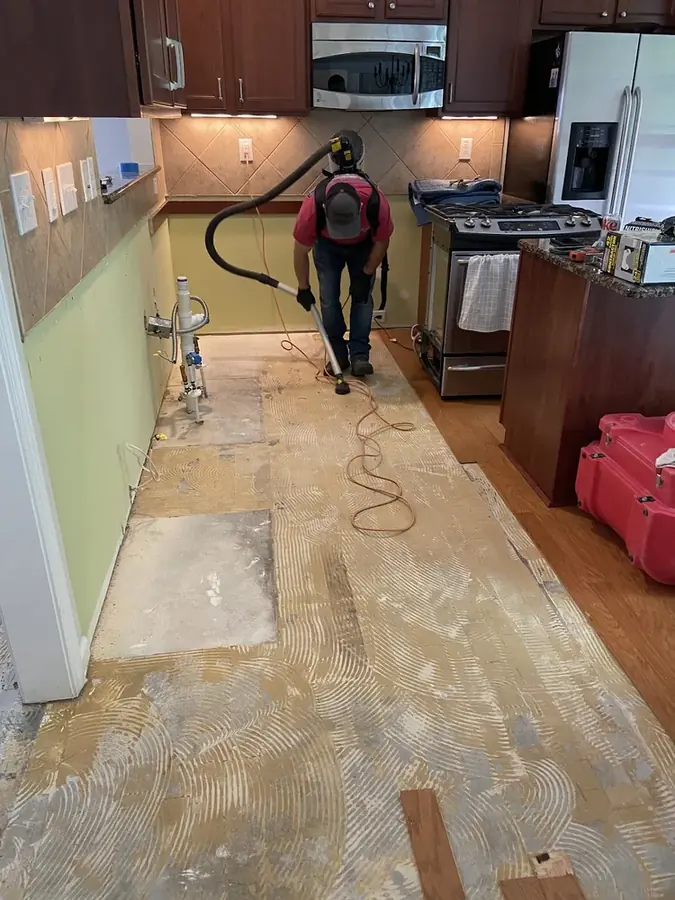
Newer Cary homes are full of water lines you never think about: the braided hose behind the washer, the supply under the dishwasher, the little line to the refrigerator ice maker. Any of them can fail slowly and run for hours or days behind a cabinet where no one sees it, until the floor buckles or a ceiling below stains. Old North State Restoration finds that hidden water and dries it. A tank that failed and flooded is on the water heater failure page; this page is the slow appliance leak and its hidden reach.
Where appliance leaks hide
The damage usually spreads sideways and down before it shows:
- A washer hose or valve leaks into the wall and down to the floor below
- A dishwasher supply or drain seeps under the cabinet toe kick and subfloor
- A refrigerator ice maker line drips behind the unit onto hardwood or laminate
- Water travels under cabinets and into wall cavities far from the appliance
How an appliance leak is handled
Finding the full reach of the water is the whole job:
- Trace the source and confirm the supply is shut off
- Pull or protect the appliance and open cabinet bases where needed
- Map hidden moisture under floors and behind cabinets with meters and thermal imaging
- Dry the structure to a verified standard and document the loss for your claim
Because kitchens and laundry rooms trap humidity, the EPA guidance on mold makes clear why drying the cavity, not just the surface, is what prevents mold.
Preventing the next leak
Small habits catch most appliance leaks early:
- Replace rubber washer hoses with braided steel lines every few years
- Check under the sink, dishwasher, and fridge for damp spots now and then
- Shut the washer supply when you travel, or add auto-shutoff valves
- Watch for buckling floors or a musty smell near an appliance
A small drip can soak a big area
An appliance line that weeps a little for weeks can quietly ruin a subfloor and a cabinet run. If the floor near an appliance feels soft or smells musty, it is worth checking before it spreads.
How a appliance leak water damage loss is handled in Cary
Call and dispatch
Whoever answers the Cary line sends the nearest crew, day or night, with pumps, air movers, and moisture meters.
On-site assessment
The tech who does the walkthrough finds the source and the full reach of the water, including what soaked into subfloor, lower levels, and wall cavities.
Extract and dry
The extraction crew pulls the standing water first, then air movers and dehumidifiers run to a verified dry standard, not just the surface.
Verify and document
Most crews record moisture readings daily until the structure holds a dry target, then document the loss the way an adjuster needs it.
How a water loss is handled in Cary
Rapid local response
The response team answers day or night, and the nearest crew heads out the moment you call, across Cary and western Wake County.
IICRC S500 drying standard
Trained crews with truck-mounted extraction, air movers, and moisture meters dry to a verified standard, not a shop vac and a box fan.
Claim-ready documentation
The loss is documented with timestamped photos and daily moisture readings, the paperwork an adjuster needs to move a claim.
Local water experts
Finished basements, sump pits, crawl spaces, and AC condensate lines: the local pros know how water moves through Cary homes.
From Cary across western Wake County
Local water damage pros cover Cary and western Wake County, day or night.
Local crews cover Cary and all of western Wake County, day or night. Whoever answers the Cary line asks for the cross street and which level of the house is wet, because that decides how much equipment goes on the truck.
Coverage runs across Cary, Apex, Morrisville, Holly Springs, Fuquay-Varina, Raleigh, Garner, Knightdale, Durham, and Chapel Hill.
See every town and ZIP covered ›Related restoration services
Cary water damage questions, answered
How do I know if an appliance is leaking?
Watch for buckling or soft flooring, a musty smell near the appliance, water stains on a ceiling below, or a higher water bill. Many appliance leaks are slow and hidden, so the first sign is often damage rather than water you can see.
What should I do when I find an appliance leak?
Shut off the water supply to that appliance, unplug it if you can do so safely, and wipe up what you can reach. Then call us, because the water that soaked under the cabinet and floor is what needs professional drying.
Can you dry under my cabinets and floor?
Yes. The crew opens cabinet bases and uses floor drying systems, air movers, and dehumidifiers to dry the toe kick, subfloor, and wall cavities, monitoring with meters to confirm the hidden areas are actually dry.
Will my hardwood floor be ruined?
Not always. When drying starts soon enough, a floor drying system can often pull the moisture out of hardwood in place and save most of it, with only badly cupped or delaminated boards needing replacement.
Does insurance cover appliance leaks?
A sudden appliance failure is usually covered. A slow leak that went unnoticed for a long time can be disputed, which is why the crew documents the source and the damage carefully to support the claim.
How can I prevent appliance leaks?
Replace rubber supply hoses with braided lines, check under appliances periodically, shut the washer supply when you travel, and consider leak sensors or automatic shutoff valves on the washer and under sinks.
A local Cary crew is standing by
Water sitting means damage spreading. Call Old North State Restoration and a local crew heads out across western Wake County, day or night.
(984) 378-1178Call now, a local crew picks up day or night